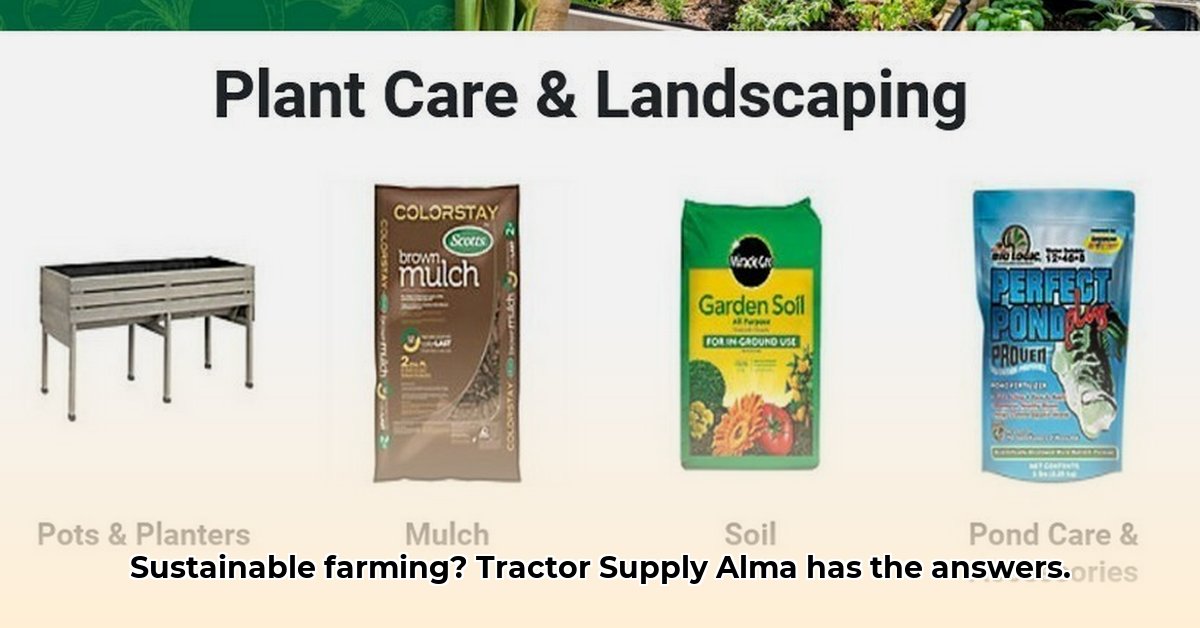
Tractor Supply Company (TSC) in Alma, Michigan, offers more than just farm supplies; it's increasingly becoming a resource for those seeking sustainable agricultural practices. For more information on TSC's fertilizer offerings, see our fertilizer page. This article explores TSC Alma's role in supporting local, environmentally conscious farming, examines its sustainable product offerings, and provides actionable steps for consumers and farmers alike. We'll also discuss the challenges and opportunities for TSC to further its contribution to sustainable agriculture in the Alma community.
TSC Alma's Sustainable Product Offerings
TSC Alma stocks a variety of products relevant to sustainable agriculture. While a comprehensive list with specific sustainability certifications isn't readily available, a significant portion of their inventory can aid in environmentally conscious farming.
Seeds and Plants
The store carries organic seeds (USDA Organic certified where applicable), providing options for planting crops without harmful pesticides. This contributes to soil health and reduces environmental impact. However, consumers need to carefully check individual product labels for certifications.
Livestock Feed
TSC Alma offers livestock feed, but the extent of sustainable sourcing practices for all feed components isn’t consistently detailed. Understanding the feed's origin and production methods remains a crucial factor for environmentally conscious farmers. Look for feed options that indicate sustainable sourcing practices where possible.
Tools and Equipment
The store also offers tools and equipment that can promote efficiency and reduce resource consumption on farms. This includes water-saving irrigation systems (if available) and tools designed for reduced fuel consumption. Checking product specifications is key to identifying such options.
Fencing and Other Materials
Durable, long-lasting fencing and other materials reduce the need for frequent replacements, contributing to waste reduction. Consumers should inquire about the sourcing of these materials to ascertain their sustainability credentials.
Actionable Steps for Sustainable Farming at TSC Alma
Making sustainable choices requires proactive engagement. Here are actionable steps to maximize the benefits of TSC Alma's resources:
Prioritize Certified Organic: Give preference to products bearing the USDA Organic seal, indicating compliance with rigorous standards for environmentally sound agricultural practices. This ensures a verifiable commitment to sustainability.
Read Every Label: Carefully review labels to identify sustainable sourcing information, such as responsible packaging or reduced-impact manufacturing processes. Don’t hesitate to ask store staff for clarification on unclear labels.
Engage with TSC Staff: Don’t hesitate to engage staff about product sourcing and inquire about sustainable alternatives. Their insights can be invaluable.
Complement with Local Sources: Supplement TSC purchases with products from local producers known for their commitment to sustainable practices. This supports community efforts and reduces transportation-related emissions.
Implement Conservation Practices: Explore TSC's offerings for water conservation tools and soil enrichment methods to optimize resource utilization and minimize environmental impact.
Track Your Progress: Keep a record of your sustainable purchases. This allows for progress tracking and identification of areas for improvement in your sustainable farming practices.
Consumer Choices: Empowering Sustainable Agriculture
Consumer demand significantly influences the marketplace. By prioritizing sustainably sourced products over conventionally produced ones, consumers drive a shift towards more sustainable agricultural practices. Choosing local whenever possible enhances this effect, supporting local economies and reducing carbon footprints associated with transportation.
Challenges and Opportunities for TSC Alma
While TSC Alma offers products that support sustainable agriculture, challenges remain. The lack of readily available complete sustainability data for many products hinders informed consumer choices. Opportunities for improvement include:
Enhanced Transparency: TSC could improve transparency by providing detailed information regarding product sourcing, manufacturing processes, and environmental impact.
Improved Product Labeling: Clearer, comprehensive labeling, highlighting sustainability certifications and sourcing information, would greatly benefit consumers.
Strengthened Community Partnerships: Collaboration with local farms and organizations dedicated to sustainable agriculture could further promote eco-friendly practices.
Conclusion: A Collaborative Approach to Sustainable Farming
TSC Alma's contribution to sustainable agriculture is notable but requires further development. By making informed choices, engaging with TSC staff, and supporting local sustainable farms, consumers significantly impact the trajectory of local agriculture. Increased transparency and partnerships from TSC will amplify its role in creating a greener future for the Alma community and beyond.